

Stuart Fogarty

About Stuart Fogarty
Posts by Stuart Fogarty:
RTE’s Advertising Packages for Katie Taylor’s Last Fight in Croke Park Start at €30k
From Irish Times:
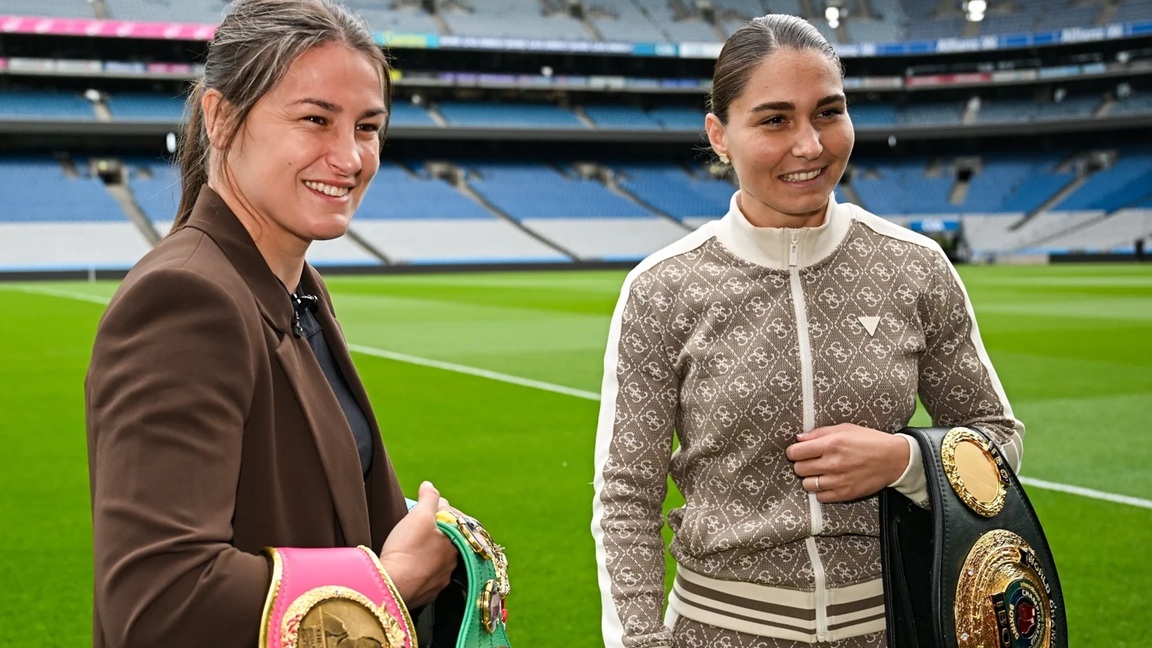
With Katie Taylor’s last fight set to take place in Croke Park on Saturday, September 5, RTÉ has unveiled a new advertising package around the much-anticipated event, as she takes on Flora Pili in what the broadcaster is billing as one of the most significant sporting events in Irish history.
The fight will see Taylor attempt to become a three-time undisputed world champion as she brings her professional career to a close.
Taylor’s final appearance is expected to generate significant audience and advertiser interest, bringing to a close a career during which she became one of Ireland’s most successful sportspeople and played a central role in raising the profile of women’s boxing internationally.
As part of its commercial offering for the event, RTÉ has launched a €30,000 AV advertising package spanning RTÉ2 and RTÉ Player.
The package includes one 30-second television spot in either the pre-fight or post-fight commercial break, together with 100,000 impressions on RTÉ Player. The overall cost is split between €25,000 for television and €5,000 for RTÉ Player.
RTÉ said digital packages will include both live and video-on-demand inventory, although the majority of impressions are expected to be delivered during the live stream.
Premium positioning in-break will incur an additional charge of 30%, while advertisers looking to select a particular television break will pay an additional 20%.
Potential advertisers are being asked to contact RTÉ Media Sales by August 26, with the final booking deadline set for August 28
TV advertising revenue up 3% in H1
From MediaPlus
Irish television advertising revenue increased 3% during the first half of the year to €136.5m, figures from TAM Ireland show.
The total accounts for revenue generated for advertising on linear television, product placement, advertising-funded programming and broadcaster catch-up and on demand services (BVOD).
BVOD saw the strongest growth, growing 12% year-on-year, while linear television also saw solid growth of 2%.
With revenue of €69.5m, the first quarter was stronger than Q2 (€66.97m) by approximately €2.5m.
The findings are based on figures supplied by broadcasters RTÉ, Virgin Media, TG4, Channel 4 and Sky Media and compiled for TAM Ireland by Guardian Management Accounting.
During the first quarter, commercial television achieved an average weekly reach of 75% among people aged 15 and over, 67% among adults aged 25-44 and 70.2% among grocery shoppers with children.
RTÉ’s Commercial Revenues Remained Resilient in 2025 Despite Softer Market
From Adworld
RTÉ’s advertising and sponsorship revenues across television, radio, digital platforms and the RTÉ Guide totalled €121.1m last year, according to the broadcaster’s annual report for 2025.
This is broadly unchanged from the €121.3m in 2024.
Advertising and sponsorship accounted for as much as 76% of RTÉ’s total commercial income.
According to the annual report, the broadcaster generated total commercial revenues of €158.6m during the year, up marginally from €158.1m in 2024.
The report shows that television advertising and sponsorship income fell by €3.6m to €81.3m while radio and digital advertising and sponsorship revenues increased by almost 10% to €39.5m from €36.1m. Advertising and sponsorship revenues generated by the RTÉ Guide, meanwhile, remained stable at €300,000.
Other commercial revenues also showed mixed performances. Content, merchandise and related sales declined to €12.9m from €14.3m in 2024 while other income increased to €13m from €10.9m. Network income- largely related to its transmission division and its Saorview platform- remained unchanged at €11.6m.
In its review of trading conditions, RTÉ said the Irish television advertising market remained difficult throughout 2025.
Citing TAM Ireland figures, it noted that total revenue across television and broadcaster video-on-demand services was just under €284m, representing a 3% decline on 2024, although still 2% higher than 2023. RTÉ said the comparison was influenced by an exceptionally strong 2024 that benefited from the Paris Olympic Games and UEFA European Championships.
The broadcaster also pointed to stronger conditions in radio, noting that Radio Centre Ireland reported total industry revenues of €166m during 2025, an increase of 0.9% year on year. Growth was driven by branded content and digital audio as advertisers continued to diversify their use of audio platforms.
Against that backdrop, RTÉ said its commercial performance demonstrated resilience, with growth in radio and digital helping to compensate for softer television advertising revenues.
The improved financial performance also reflected continued cost management and additional in-year savings. RTÉ said its stronger-than-expected EBITDA was supported by solid commercial revenues, lower-than-planned headcount costs and the deferral of certain projects into 2026.
Overall, total revenues – including €224.8 in public funding amounted to €383.4m while the broadcaster returned a net surplus of €22.5m for 2025, up from €17.0m in 2024.
According to RTÉ’s director general, Kevin Bakhurst: “RTÉ has reversed the trend of reporting deficits and strengthened our financial position. Thanks to highly effective cost management and proper financial planning, we are reporting another
surplus this year. This result has also been supported by our new commercial strategy, which has driven digital revenue and is paying dividends.”
IAPI Rebrands as Creative & Communications Association
From Adworld
The Institute of Advertising Practitioners in Ireland (IAPI) has rebranded as the Creative & Communications Association.
According to the organisation, the rebrand reflects “the evolution of Ireland’s creative and communications industries and the increasingly integrated way agencies and consultancies operate today.”
According to Siobhan Masterson, CEO, the new name “reflects this changing landscape, bringing together a broader community under one representative voice while maintaining the Association’s long-standing commitment to championing creativity, professional excellence and industry leadership.”
The Institute of Advertising Practitioners in Ireland (IAPI) was established in 1964, evolving from the Irish Association of Advertising Agencies which was set up in 1928.
“The new identity marks the next chapter for the Association as it continues to support its members, advocate for the industry and help shape the future of Ireland’s creative and communications sector,” Masterson added.
Staggering RTÉ viewing figures for Mayo’s All-Ireland win
From Western People
An average of 944,000 viewers, representing an 82% share of the available audience, tuned in to watch Mayo’s historic win after a 75 year wait to lift the Sam Maguire Cup.
The peak minute at 17:11 had 1.1 million viewers. There have been 566,000 streams to date on RTÉ Player.
The national broadcaster revealed the viewing figures today.
RTÉ Head of Sport Declan McBennett said, “The Mayo victory – and the response to it – shows just how much our national games mean to us as a nation.” Meanwhile, an average of 324,000 viewers tuned in to Up For The Match – Live From Croke Park on RTÉ One representing a share of 38% of the available audience on Saturday night. To date Up For The Match – Live from Croke Park has had 57,000 streams on RTÉ Player.
Karen Preston Set to Leave Mediahuis Ireland in October
From Adworld
Karen Preston, one of the leading lights in the Irish media and advertising industry over the last 20 years, is to step down as chief commercial officer of Mediahuis in October.
Well-liked and well-known within the industry, Preston has played a central role in the transformation of Mediahuis Ireland’s commercial revenue model, helping to build a more diversified, digitally led and multi-platform business.
“It has been a privilege to work with Mediahuis Ireland for most of my career and to be part of such a talented team,” said Preston.
“I am proud of what we have achieved together over the years, particularly through a period of significant transformation. I now look forward to spending more time with my family and to travelling.”
“Karen has been an important member of the Mediahuis Ireland executive leadership team and has made a significant contribution to the business over many years,” added Sheena Peirse, CEO of Mediahuis Ireland.
“She has played a central role in shaping our commercial growth strategy and in strengthening the business across digital channels and new revenue opportunities. We thank her sincerely for her leadership and commitment and wish her every success for the future.”
Earlier this year, Mediahuis secured Gold for Media Brand of the Year with Indo Sport with Joe Molloy from the Irish Independent at the Media Awards, alongside another Gold for Best Use of Irish Language for the An Post Proud Sponsors of Seachtain Podcast which was delivered in partnership with Core Sponsorship and Starcom, part of Core.
Fáilte Ireland spends over €10m on short breaks campaign
From RTE
Fáilte Ireland is spending more than €10m on a campaign to encourage short breaks at home after domestic tourism hit a “flat” spot in 2025.
The tourism authority paid out €2.46m developing its “Find Yourself” campaign, with €1.85m spent on videos and other promotional content.
There was a further bill of €293,000 for “key visuals” for regional areas and about €20,000 paid for radio and digital audio material.
Fáilte Ireland also spent €301,000 on “social media assets”, according to records released under Freedom of Information.
In the first part of the campaign covering March to May, the marketing budget was €2.28m, of which €460,000 was spent on digital marketing and €421,000 on traditional media.
Further expenditure included €215,000 for public relations and €1.18m that was categorised as “audio-visual” spend in the records.
Fáilte Ireland said the 2026 spend on the campaign would be around €8m and that the content created was a long-term investment for use over a five-year period.
It said that €250,000 of the budget was earmarked for content creators, including travel influencers and celebrities.
A slideshow said this could include five content creators with a combined following of 2 million, including Roz Purcell and Kevin Penrose.
A separate page said “rejuvenators” like Katja Mia, the Gastro Gays, and Tadhg Fleming had an audience of 4.3 million people.
The presentation said the “Find Yourself” motif had scored far better than Fáilte Ireland’s “Keep Discovering” branding and other global travel advertising.
It said short breaks in Ireland meant less pressure to do and see new things, freedom to make last-minute decisions and “comfort in the familiarity.”
A design brief said: “We want people to prioritise themselves by taking short breaks. We want them to be captivated by the spirit of Ireland, freeing them to go with the flow and find the joy in small moments.”
It said Fáilte Ireland was looking to grow revenue especially in off-peak periods and “less mature” destinations like the northern part of the Wild Atlantic Way, Ireland’s Hidden Heartlands, and Ireland’s Ancient East.
One slide said there had been significant growth in domestic revenue since 2019, but that 2025 had been “tracking flat.”
Asked about the campaign, Fáilte Ireland said domestic tourism generated 40% of overall tourism revenue in the country.
“Domestic tourism is a vital driver of Ireland’s visitor economy. In 2025, Irish residents took an estimated 15.4 million domestic trips, generating approximately €3.6 billion in domestic tourism revenue,” a spokesperson said.
“In Quarter 1 of 2026 the number of trips taken by Irish residents within the State increased by 6% compared to the same period last year, while domestic tourism expenditure grew 9%, with stronger growth in holiday spend (+14%) recorded,” they added.